Massa’s 2008 case is no longer about taking Hamilton’s title
The UK Supreme Court will not rewrite Formula 1 history, but it may decide whether Massa’s allegations of institutional inaction deserve a full trial.
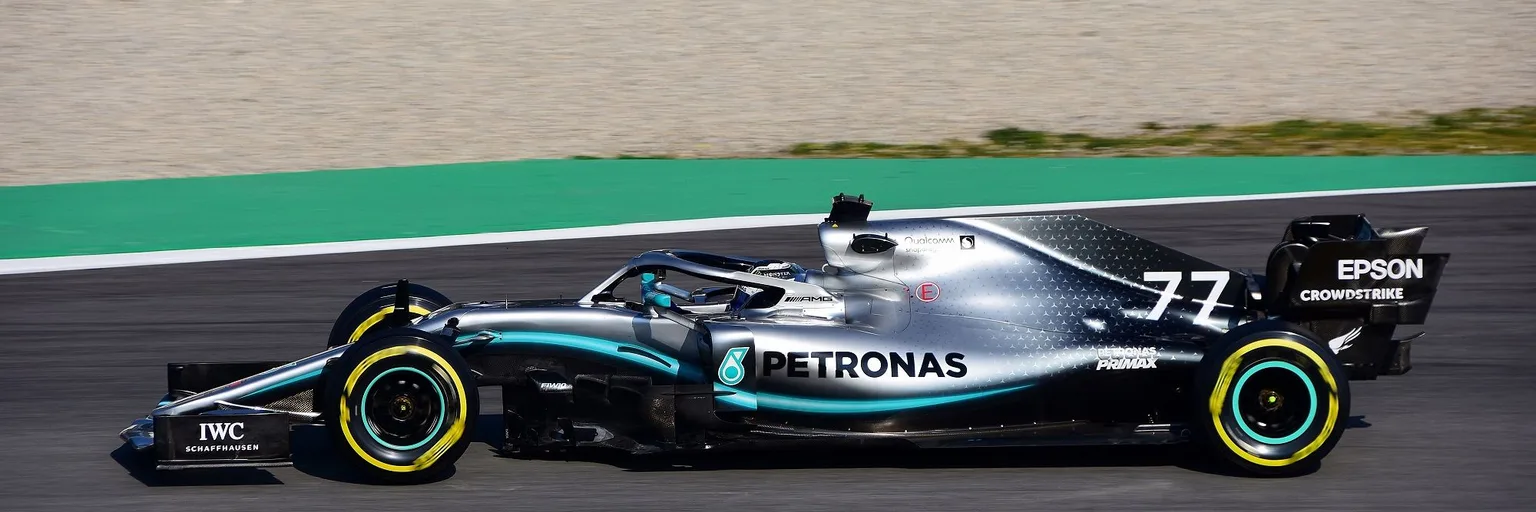
Photo: Michał Obrochta / Wikimedia Commons (CC BY-SA 4.0)
The 2008 Singapore scandal was punished after it became public, but its legal consequences remain unresolved. Felipe Massa’s lawsuit asks a more uncomfortable question: what if the real failure was not only the deliberate crash, but the alleged decision by powerful people not to disclose or act on what they knew while the championship was still alive?
The UK Supreme Court will hear appeals on February 2 and 3, 2027, in a case brought by Formula One Management, Bernie Ecclestone and the FIA. The appeal challenges the decision to let Massa’s remaining unlawful-means conspiracy claim continue. As the UK Supreme Court’s case record makes clear, the judges are not being asked to decide whether Lewis Hamilton should lose the 2008 championship. They are being asked whether Massa’s legal theory is strong enough to reach a full trial.
That distinction changes the meaning of the dispute. Massa is seeking approximately £64 million in damages, not a judicially manufactured rewrite of the official standings. The title remains Hamilton’s in the record of Formula 1. The question now is whether the organizations and individuals who governed the sport can be required to answer for alleged knowledge and inaction surrounding the Singapore Grand Prix.
The Supreme Court is deciding whether the case deserves a trial, not who won in 2008
The legal posture is narrower than the headlines suggest. In November 2025 and March 2026, High Court judge Mr Justice Jay struck out Massa’s claims involving breach of contract, inducing breach of contract, alleged duties owed by the FIA and declaratory relief. He did not strike out the unlawful-means conspiracy claim.
That surviving claim is not a finding that a conspiracy occurred. It is permission for the argument to proceed past an early procedural challenge. The defendants are now trying to end it before a full trial. The official court summary describes the central legal questions: whether unlawful-means conspiracy can rest on certain kinds of civil wrongs, a contract to which Massa was not a party, a breach of foreign law or conduct defendants did not know was unlawful.
In our view, this is precisely why the hearing matters beyond Massa’s personal compensation. A sporting body can protect the sanctity of results by saying championships cannot be changed after the fact. But that principle becomes much less persuasive if it also protects institutions from examining alleged misconduct before the result becomes final.
The court may reject Massa’s remaining claim. It may also allow the case to continue without endorsing his version of events. Either outcome would be about the legal limits of sports governance, not about handing a trophy backward through time.
Crashgate exposed the difference between punishment and accountability
The underlying episode is familiar but still decisive. On September 28, 2008, Nelson Piquet Jr. deliberately crashed his Renault on lap 14 of the Singapore Grand Prix to help teammate Fernando Alonso. The safety car reshaped the race, while Massa’s Ferrari suffered a disastrous pit stop after the fuel hose remained attached to the car. Massa finished outside the points; Hamilton finished third.
The deliberate nature of the crash became public in 2009, after Piquet disclosed the scheme. Renault’s senior management faced major disciplinary consequences. But the sporting damage had already been absorbed into the championship. Hamilton finished the season one point ahead of Massa, and the scandal could not simply be inserted into the calendar as though it had been discovered before the race.
Massa’s case gained force from comments attributed to Ecclestone in a 2023 interview, in which he suggested that senior Formula 1 figures knew about the deliberate crash before the 2008 championship ended. That allegation remains disputed, and the court has not ruled that the alleged conspiracy happened. Still, it creates the institutional issue that Formula 1 cannot comfortably avoid: if governing figures knew enough to investigate, what responsibility followed from allegedly choosing not to do so?
Punishing Renault’s conduct after the revelation was not necessarily the same as protecting every competitor affected by the original manipulation. Those are separate duties. A sport can discipline the people who engineered a scandal and still fail the participants if it does not act quickly enough to preserve a fair competition.
The money matters because it translates sporting injustice into legal harm
The £64 million claim is not a symbolic number pulled from the championship table. Massa says it represents lost earnings and commercial opportunities associated with being recognized as the 2008 world champion. That includes the financial consequences of status, not merely the points lost in Singapore.
This is where the case becomes especially difficult. Sporting competitions run on counterfactuals: remove one incident, and the entire event may unfold differently. Legal damages require something more disciplined. Massa must connect alleged knowledge and inaction to a recognizable loss, while the defendants will continue to argue that his own race and Ferrari’s pit-stop error were the reasons he failed to score in Singapore.
That burden may ultimately defeat the claim. A one-point championship margin makes the story emotionally powerful, but emotional clarity is not the same as legal causation. We should resist the easy conclusion that a trial would automatically prove Massa was the “real” champion.
Yet the financial claim serves a useful purpose. It forces the court to consider what sporting integrity is worth when a competitor’s earning power depends on an official result. If governing bodies can delay action until a scandal is no longer capable of changing the standings, they may avoid competitive consequences while still benefiting from the appearance of order. Compensation is one way to test whether that model is acceptable.
Formula 1 should want the facts examined, even if Massa loses
The most damaging outcome for Formula 1 would not necessarily be a judgment awarding Massa £64 million. It would be a process in which the sport never has to disclose what was known, when it was known and why the response was delayed.
A full trial would not guarantee Massa the championship, and it would not require the court to declare that Hamilton’s title was illegitimate. It could, however, examine documents, testimony and decision-making that cannot be resolved by invoking the finality of the standings. That is the value of judicial scrutiny: not an alternate podium, but an evidentiary record.
The governing bodies have a legitimate argument that old sporting disputes should eventually end. They also have a legitimate legal right to challenge the surviving claim. But finality cannot mean immunity from accountability. If the 2008 scandal is still being litigated nearly two decades later, that is partly because the sport never produced a satisfying institutional answer to the question of who knew what before the championship ended.
Our verdict is straightforward: Massa may never receive the title, and probably should not expect the Supreme Court itself to award it. But the case should be judged by whether it opens the door to a serious examination of governance. Formula 1’s credibility will not be protected by pretending the controversy is over. It will be protected by showing that, when the sport’s own institutions are accused of looking away, they can be made to explain themselves.
No topics yet: start the first one.
More stories
Bortoleto is no Schumacher yet—and Audi should welcome that
Mattia Binotto’s Schumacher comparison raises the stakes around Gabriel Bortoleto, but Audi’s real challenge is building a car worthy of Brazil’s next great hope.
F1's American Dream: Cadillac's Strategy Amidst Red Bull's Lingering Feud
Cadillac's ambitious entry into Formula 1, bolstered by innovative technical choices and American talent like Colton Herta, unfolds as Red Bull grapples with the fallout of a public power struggle between its former leaders.

Fornaroli's Dual Challenge: A Blueprint or a Bridge to Nowhere?
McLaren's innovative strategy to blend Leonardo Fornaroli's F1 reserve duties with a WEC Hypercar drive sparks debate: is this the future of driver development or merely a sophisticated holding pattern?
Mercedes' Unmatched Profitability: A Threat to F1's Competitive Soul?
Mercedes-AMG Petronas F1 Team's immense 2025 revenue, exceeding £633 million, and its projected billion-dollar future underscore a financial supremacy challenging competitive equity in Formula 1.