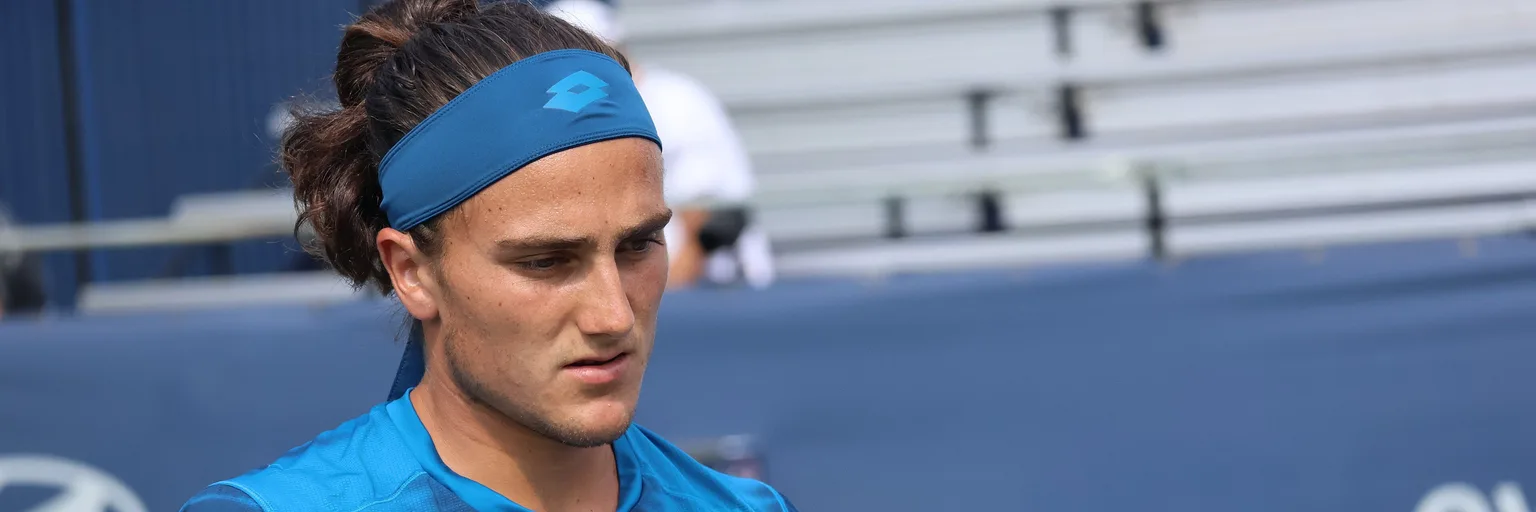
Wawrinka’s Lyon Farewell Proves Tennis Still Needs Human Stories
Stan Wawrinka’s dramatic Lyon win makes the case for emotional farewell moments—provided tennis celebrates longevity without pretending nostalgia is a comeback.
What does a farewell mean in tennis when the player refuses to leave quietly? Stan Wawrinka’s first-round victory in Lyon offers the best possible answer: it can be a real match, with real pressure, before it becomes a ceremony.
Wawrinka defeated Martin Landaluce 6-3, 6-7, 7-6 at the Lyon Open. The drama was not decorative. Landaluce saved a match point in spectacular fashion, according to the ATP Tour’s match video, and the contest still went Wawrinka’s way.
That combination matters. Wawrinka is continuing a retirement farewell tour, but Lyon did not need to manufacture an ending for him. The match supplied its own argument: farewell tennis is most compelling when emotion and competition are allowed to coexist.
The farewell works because the match came first
Tennis has a particular weakness for turning departures into content. A player walks onto a court, receives a tribute, waves to the crowd, and the sport quickly moves on. Those occasions can be moving, but they become hollow when the competition is merely a pretext for the goodbye.
Lyon was different, at least in the evidence available. Wawrinka had to survive three sets and a decisive tie-break against a player whose most spectacular moment included a match-point save. Yahoo Sports reported the 6-3, 6-7, 7-6 result, a scoreline that makes the emotional story credible rather than sentimental.
That is the standard tennis should want. The crowd can honor a veteran, but the veteran should still be asked to solve a problem. Wawrinka did not simply receive Lyon’s affection; he converted it into a competitive occasion. In our view, that is why the moment feels valuable instead of staged.
Longevity deserves respect, not mythology
Wawrinka’s farewell tour has already carried him through emotionally charged exits. At Roland-Garros, he lost in the first round to Jesper de Jong, 6-3, 3-6, 6-3, 6-4, in what RTS described as his farewell to the tournament. At the US Open, his journey ended in the opening round against Matteo Berrettini, 6-7(4), 6-7(3), 0-6, as the ATP Tour reported.
Those results should temper the Lyon celebration. One victory does not reverse the broader arc of a retirement tour, and it would be a mistake to treat a compelling final chapter as evidence of a full competitive revival. The point is not that Wawrinka has suddenly returned to the center of the sport. The point is that his presence still gives an appearance in Lyon unusual emotional weight.
That distinction protects the player as much as the audience. Wawrinka does not need the fantasy of another career peak to justify attention. Longevity is not a substitute for form, but neither is form the only measure of sporting value.
Tennis should stop apologizing for emotional attachment
The questions circulating around Wawrinka’s farewell are revealing. Fans are not asking only who won or what the next draw looks like. They are asking about the relationships, places and memories attached to a career. A planned final farewell event with Roger Federer, Andy Murray and Gaël Monfils adds another layer to that public interest, according to Ouest-France.
Some purists will dismiss this as nostalgia taking space away from younger players. That criticism has a point if farewell events become automatic invitations or if sentiment overwhelms the sporting calendar. But tennis is not only a ranking system. It is also a memory business, and the strongest memories often belong to athletes whose careers made fans feel something beyond the result.
The answer is not to eliminate these moments. It is to frame them honestly. A veteran can be celebrated without being presented as a title favorite. A farewell can be important without pretending that every match is a comeback. And a tournament can benefit from a human story without turning the player into a mascot.
Lyon offers the right model for a last chapter
The most persuasive farewell is not the one with the biggest tribute. It is the one that leaves room for uncertainty. Wawrinka might lose his next match. He might produce another upset. Either possibility is more interesting than a prewritten ceremony because the court still has authority.
That is the lesson Lyon should leave with tennis. Keep the invitations, the applause and the emotional send-offs—but preserve the competitive test. Let veterans earn the spotlight through the match itself, and let fans care without being told that affection equals a ranking.
Our verdict is clear: tennis should embrace farewell tours, but it should not confuse nostalgia with a comeback. Wawrinka’s Lyon win works precisely because it is both things at once—a genuine victory and a reminder that careers are measured not only by their final statistics, but also by the feeling they leave behind.
No topics yet: start the first one.
More stories
Jodar's Surge and Italy's Hope: The ATP Finals Race Heats Up
The battle for the ATP Finals in Turin is a compelling blend of rising stars like Rafael Jodar and local hopes, setting the stage for an unforgettable climax to the tennis season.
Stefani and Dabrowski: The Undeniable Best Doubles Duo of 2026
Luisa Stefani and Gabriela Dabrowski's seventh final and WTA Wuhan title solidify their status as the best doubles pair of the year, showcasing a dominant partnership that is redefining women's tennis doubles.
Jódar's Shanghai Breakthrough: A New Dawn for Spanish Tennis?
Rafael Jódar's historic run to the Masters 1000 Shanghai final, facing countryman Alejandro Davidovich Fokina, unequivocally signals a vibrant future for Spanish tennis, proving its enduring pipeline of elite talent.
Mattia Bellucci's Uneven Rise: Another Italian Star, or a Work in Progress?
Mattia Bellucci's recent ATP Challenger success, highlighted by strong performances in Jinan, offers a glimpse of his potential, yet his inconsistent 2026 season raises critical questions about his path to the main circuit and Italy's broader tennis resurgence.