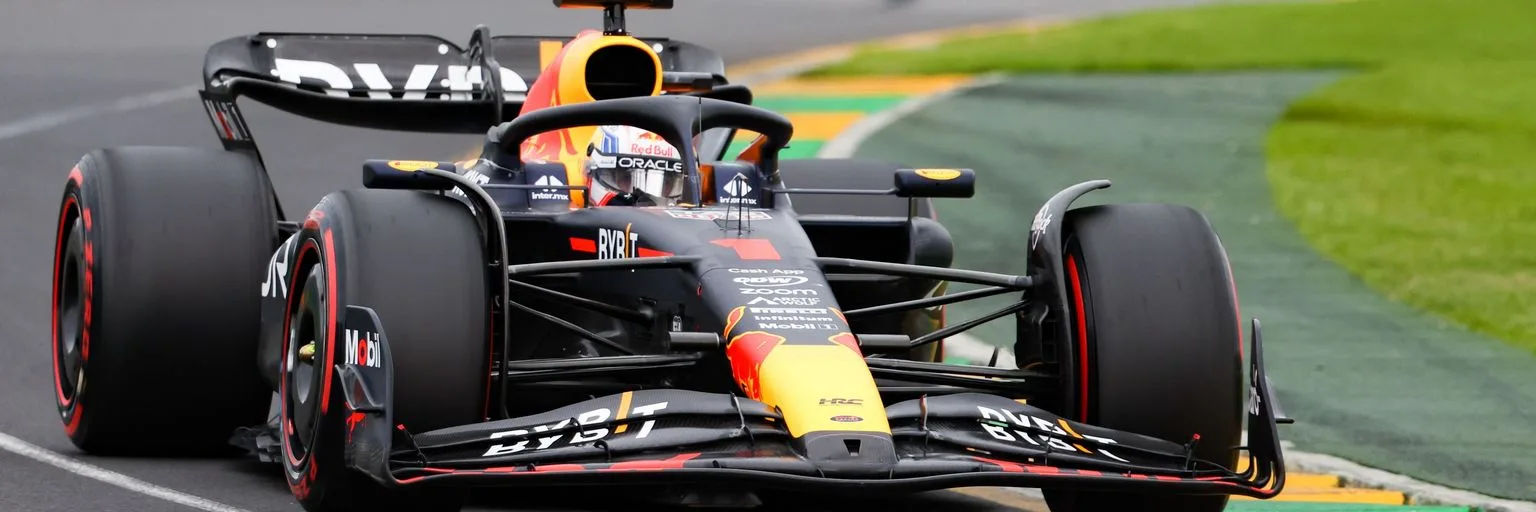
F1's Singapore Delays: Why Street Circuits & Sprint Races Are a Risky Mix
The recent rain-induced delays at the Singapore Grand Prix expose Formula 1's growing vulnerability to extreme weather, raising serious questions about its congested calendar and reliance on demanding street circuits.
Photo: FiledIMAGE / Shutterstock.com
Is Formula 1, in its relentless pursuit of spectacle and global expansion, becoming a hostage to the elements and its own ambitious schedule? The chaotic weekend at the Singapore Grand Prix certainly makes it seem so. Repeated heavy rain led to significant delays for both the sprint race and the main qualifying session, exposing F1's delicate balance between high-octane entertainment and practical realities on some of its most demanding tracks. What transpired in Marina Bay wasn't merely a weather anomaly; it was a glaring spotlight on a systemic vulnerability.
The drama unfolded as torrential rain swept across the Marina Bay Street Circuit, forcing a delay to the sprint race just 15 minutes before its scheduled start, as marshals worked to clear water from the track, as reported by Bozeman Daily Chronicle. Later, the main qualifying session for Sunday's race also faced a significant delay, as the FIA announced a new start time following the disrupted sprint, according to Motorsport.com. This chaos underscored the schedule's inherent fragility.
The Unforgiving Nature of Street Circuits
Street circuits have become a cornerstone of F1's global appeal, and there's no denying their unique allure. They are often described as spectacular, unforgiving, and utterly unpredictable, pushing F1 racing to its limits, as Red Bull highlights. Yet, this very unpredictability becomes a liability when nature intervenes. Circuits like Monaco and Singapore are notoriously challenging for overtaking, and any error in qualifying can severely impact a driver's weekend, as Williams F1 explains. In wet conditions, these challenges are amplified exponentially. The narrow confines, close walls, and often less-than-ideal drainage of temporary street tracks create treacherous conditions that purpose-built circuits are designed to mitigate. As F1 continues to expand its calendar, adding more street circuits, it embraces higher stakes, but also higher risks.
A Calendar Under Constant Pressure
This isn't Singapore's first encounter with weather-induced chaos; past races have seen similar delays due to heavy rain, showcasing a recurring vulnerability. The 2026 Formula 1 season is framed with new regulations and a calendar that Sportmonks reports as 23 rounds, though Medium discusses a calendar of 24 races. While a packed schedule aims to maximize fan engagement and global reach, it leaves little room for maneuver when unforeseen events occur. Each delay has a ripple effect, impacting not just the immediate session but also subsequent events, broadcast schedules, and the meticulous logistics of the entire operation. This compressed timeline, especially in locations prone to severe weather, creates an inherent stress point that F1 management seems to be continuously underestimating.
The Sprint Format: An Unintended Accelerator of Chaos
The introduction of the sprint format, intended to add more competitive action to a Grand Prix weekend, arguably exacerbates these scheduling vulnerabilities. By cramming an additional race and qualifying session into an already tight schedule, any disruption becomes disproportionately impactful. When the sprint race is delayed, it compresses the timetable for the subsequent main qualifying session, placing added pressure on teams, drivers, and the FIA to adapt rapidly. This format, designed to enhance excitement, instead amplifies the potential for logistical headaches and driver fatigue in an already demanding environment. The constant quest for more on-track action might be inadvertently creating more off-track tension.
Prioritizing Safety in a High-Stakes Environment
Ultimately, the discussion must always circle back to safety. While modern F1 has made tremendous strides in driver protection, racing a cutting-edge machine on a flooded street circuit remains inherently dangerous. The concerns over safety that led to the abandonment of older, longer track configurations, like the Nordschleife after Niki Lauda's 1976 accident, underscore F1's long-standing commitment to driver well-being, as Wikipedia reminds us. The FIA's decision to delay sessions in Singapore was a necessary one, prioritizing safety over schedule adherence. However, the repeated need for such interventions prompts a broader question: Is the current calendar structure, with its reliance on challenging street circuits and a compact sprint format, pushing the boundaries of what is reasonable, or even safe, to expect from event planning and operational execution? In our view, F1 must reassess its strategy to ensure that the spectacle never truly compromises the safety of its drivers or the integrity of its events. Perhaps a more flexible calendar, or a re-evaluation of sprint race locations, is needed to prevent future chaos, allowing the sport to flourish without constantly battling against the elements it so often glorifies.
No topics yet: start the first one.
More stories
F1's African Comeback: Rwanda GP Signals a New Global Era
The reported return of Formula 1 to Africa in 2030 with a Rwanda Grand Prix isn't just a race; it's a profound strategic move reflecting the sport's intent to reshape its demographic and financial future.

Malaysia's F1 meltdown: When tech complexity threatens sport's integrity
The chaotic Malaysian Grand Prix exposed how intricate F1 electronics, failing under rain, can undermine both safety and fair competition, leading to a troubling spectacle.
Alonso's Longevity Defies Youth Trend: F1's Enduring Veteran Power
Fernando Alonso's contract extension with Aston Martin challenges the modern F1 focus on youth, proving that seasoned expertise and unwavering competitive fire remain invaluable assets in a rapidly evolving sport.
F1's Engine Mess: When Engineering Trumps Racing Spectacle
The chaotic 2026 Bahrain Grand Prix in Malaysia exposed a critical flaw in F1's new engine regulations, leading to stalled cars and a fan revolt over overly complex engineering.