The LFP's reluctance on PSG-Lyon shows who really sets the calendar
The league reportedly resists moving PSG-OL while police ask for a delay amid unrest. Whatever the final call, the reflex tells us whose schedule comes first.
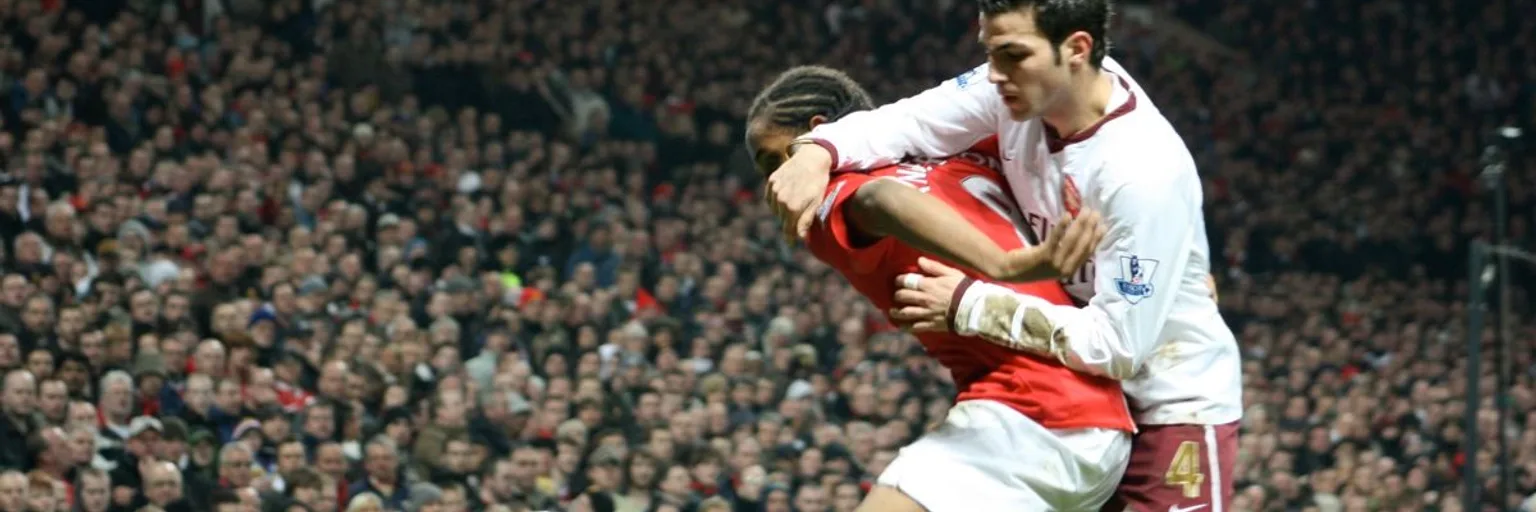
Photo: Zakarie Faibis / Wikimedia Commons (CC BY-SA 4.0)
When the police write to a league asking it to move a match, what should the answer be? "Let us think about it" is defensible. "We'd rather not" is a statement of priorities. That is the position the Ligue de football professionnelle is reported to have taken over PSG-Lyon, and in our view it says more than any press release could.
The police have a simple ask, and the league has a complicated answer
The Paris police prefecture wrote to the LFP asking for Sunday's 8:45 p.m. match between PSG and OL to be postponed, a request first revealed by Le Parisien. According to RMC Sport, the reason is an exceptional commitment of police resources: a new weekend of demonstrations is expected in the capital, after the violence and looting of Saturday, October 17, and the Stade de France hosts an NFL regular-season game the same day. As Goal reports, French media counted more than 2,400 arrests over the previous weekend.
The decision is not entirely the league's. ParisUnited notes, citing RMC Sport, that the LFP is not in favor of a change of day, but that the authorities have the last word. It adds that a decision was expected Thursday, with Monday, October 26 as the leading option. So the league's reluctance may turn out to be a negotiating position rather than the last chapter. At the time of writing, we can't say how it ends.
A league that bends only when it is cheap
The LFP is not allergic to flexibility. Toulouse-Troyes moved from Saturday to Sunday, and Montpellier-Red Star in Ligue 2 was pushed to Monday, October 26. So the principle "security can move a fixture" has already been accepted. What differs here is the price tag: PSG-OL is a top-of-the-table clash between Lyon, leading with 14 points, and PSG, level on points and behind on goal difference, and it sits in a prime Sunday-night slot.
That is the pattern we find uncomfortable. Moving a Saturday afternoon game looks cheap. Moving the marquee fixture probably costs broadcast value, and suddenly there is resistance. We can't know the league's internal reasoning, since the documentation only says it is not in favor of a day change. But if the reports are right, the outward behavior reads as schedule first, risk assessment second.
Public order isn't a scheduling preference
Let's be fair to the league. A postponement to Monday is not trivial: it would land on the evening of the Ballon d'Or ceremony in London, where ten PSG players are among the thirty nominees, according to ParisUnited. Last year, a Classique moved to the ceremony day kept several Parisians from watching Ousmane Dembélé's win. That is a real cost, and the league is entitled to weigh it.
But weigh it against what? Police resources are finite, and the request exists precisely because forces would be stretched across demonstrations, an NFL game and a Ligue 1 headliner. A ceremony clash is an inconvenience. A stretched police force in a city that saw looting a week earlier is a safety question. Mixing the two on the same scale is the problem. Even Goal's piece concludes that public order takes priority, which strikes us as the common-sense reading.
There is also the argument for keeping the game: the Parc des Princes hosted PSG-Barcelona on Tuesday with no incident reported, per ParisUnited. Fair, but a midweek night with about 5,000 officers deployed is not a Sunday of marches plus an NFL crowd. One success does not prove the next evening is equally safe.
The precedent matters more than the fixture
Our view: the league should not be in the position of resisting at all. A better model is a pre-agreed protocol in which police requests trigger an automatic rescheduling window, so nobody has to defend a broadcast slot against a safety warning. Otherwise every future request becomes a negotiation, and the next one may come when the stakes are higher.
Verdict: if the match is moved, it will be the right call regardless of how the league arrived at it, and the Ballon d'Or overlap is a problem to solve with a kickoff time or a travel plan, not a reason to keep officers stretched. If it is played Sunday after all, it should be because the prefecture is satisfied, not because the league held out. Either way, if the reports are accurate, the LFP's first instinct deserves the criticism.
No topics yet: start the first one.
More stories
Barça's nine straight wins are great, but Mourinho's Clásico is the real exam
Flick's team has matched a 1968-69 Madrid record, but a Clásico against Mourinho will show whether this is a system that travels or just a streak that flatters.
Atlético-MG’s Repeat Final Is Brazil’s Sudamericana Warning
Atlético-MG’s second straight Sudamericana final points to Brazilian consistency, but Boca Juniors will test whether depth can survive a stronger final exam.
Osimhen’s Galatasaray Move Is a Transfer Weapon, Not a Detour
Victor Osimhen’s return to Lille showed how Champions League moments can raise a striker’s leverage—but Galatasaray must turn his spotlight into lasting European credibility.

Cesc Fàbregas is Manchester United’s latest fantasy—and a warning
Fàbregas has built something credible at Como, but Manchester United must stop mistaking an attractive coaching story for the structural fix it needs.