LaLiga’s “boring” rules are beating the Premier League’s gamble
Spain is sacrificing transfer-market spectacle for solvency, and England’s financial warning suggests restraint may be football’s most competitive advantage.
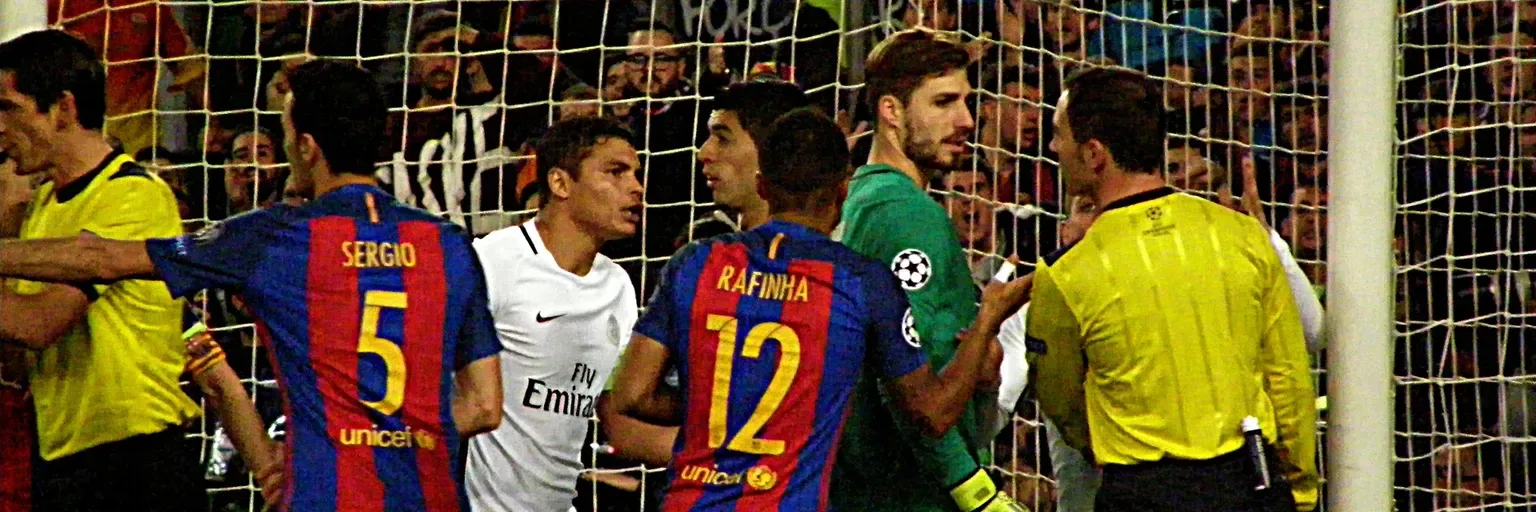
Photo: P4K1T0 / Wikimedia Commons (CC0)
The most important battle between LaLiga and the Premier League may not be played on the field. It may be fought in spreadsheets, registration offices and boardrooms—and right now, Spain’s supposedly “boring” approach looks more convincing than England’s financial fireworks.
England’s Independent Football Regulator has issued a serious warning. As El Debate reports, 94% of clubs across England’s five highest professional tiers recorded losses in 2025/2026. In the Premier League, average losses per club rose from £20 million to £44 million between 2021/2022 and 2025/2026.
That does not prove LaLiga has solved competitive balance. It does suggest that financial discipline deserves more respect than its dull reputation implies.
LaLiga is winning the argument before the crisis arrives
The essential difference is timing. LaLiga’s Economic Control system, introduced in 2013, is designed to intervene before a club turns ambition into an obligation it cannot meet. Clubs submit budgets for approval, and their spending on squads is tied to verified revenue and projected costs. The limit is recalculated before the summer and winter transfer windows, rather than treated as a punishment after the damage is done.
That is an unfashionable idea in a sport addicted to urgency. Supporters want the signing now, the promotion now and the European run now. Owners can be tempted to spend as if one good season will settle every future problem. But football clubs do not become sustainable because a transfer succeeds. They become sustainable when failure does not threaten their existence.
The available evidence gives Spain’s model a credible record. An analysis published by theesk.org says combined club equity rose 250% between 2014/15 and 2019/20, while public-body debt fell from EUR 650 million in 2013 to EUR 17 million by 2021. It also says LaLiga was the only major European league to report a net profit in 2019/20, despite the COVID-19 pandemic. Those figures do not make the system flawless, but they make it difficult to dismiss as bureaucratic theater.
The key achievement is not that every club can spend freely. It is that spending has to be connected to a club’s actual capacity. That distinction may feel restrictive to a fan in the transfer window, yet it is precisely what protects the competition when the glamorous plan fails.
England’s wealth is not the same as financial health
The Premier League’s commercial superiority remains obvious from the documentation. English football generates more than £9 billion annually, and a typical Premier League club earns almost nine times as much as a Championship club. That enormous revenue base creates the illusion that almost any spending decision can be absorbed.
But scale can conceal fragility. The IFR says more than 60% of clubs in the English Football League and National League show technical insolvency, while 29% of consulted clubs could not survive more than 30 days without fresh owner funding. The Premier League is richer than LaLiga; that does not mean its economic structure is safer.
The problem is competitive pressure. Promotion and relegation magnify the temptation to spend beyond a sensible level, while parachute payments may intensify the race to reach or remain in the Premier League. If a club’s survival depends on its owner continuing to cover losses, then the business model is not robust—it is conditional.
This is where the English system appears to be losing the argument. Retrospective sanctions may punish excess, but prevention is more valuable than punishment when wages, transfers and long-term contracts are involved. A fine after the strategy collapses does not restore the club’s lost stability.
Spain’s restraint has a sporting cost—and that matters
We should not turn LaLiga’s financial controls into a morality tale. Discipline has consequences. BBC reported that Spanish clubs spent £592 million in one transfer window, compared with more than £3 billion for English clubs. Real Madrid and Atlético Madrid accounted for £157 million and £149 million respectively, while the broader Spanish market operated with much less room to maneuver.
That gap affects the product. LaLiga cannot match the Premier League’s spending power, international reach or ability to absorb expensive mistakes. Spanish clubs may be healthier while still being less capable of retaining or attracting talent. A financially stable league that steadily loses commercial ground is not a complete success.
The system also creates controversies. The analysis from theesk.org identifies constraints on investment capacity and points to the Barcelona registration crisis of 2024-25 as evidence of regulatory tension. The framework may be transparent and rigorous, but appeals involving LaLiga, the federation and the government sports authority can create uncertainty of their own.
That is the central nuance: control is not the same as balance. Sustainable football still needs better commercial growth, stronger international appeal and a way to preserve ambition without reopening the door to reckless debt.
The Premier League should copy the principle, not the paperwork
England does not need to become Spain. Its market, revenues and ownership structures are different. But the IFR’s warning should make one lesson unavoidable: rules that merely review financial damage are weaker than rules that test whether commitments are affordable in advance.
LaLiga’s system deserves praise precisely because it is irritating. Paperwork is not a compelling sales pitch, but it can stop a club from making its future dependent on one transfer window, one promotion campaign or one owner’s patience. The best regulation is often the kind supporters notice only when it prevents a disaster.
Our verdict is clear: LaLiga is not winning the commercial contest, and it should not pretend otherwise. But on financial management, Spain currently has the more defensible model. The Premier League can keep its spectacle; it should not keep confusing spectacular revenue with sustainable football. The smarter competition is the one that can survive its biggest mistake.
No topics yet: start the first one.
More stories
Trent’s Madrid problem is bigger than one transfer rumor
Alexander-Arnold’s uncertain role at Real Madrid shows why elite transfers now hinge less on destination than on guaranteed importance, wages and tactical trust.

PSG-Barcelona Is a Test of Nerve, Not Just Young Stars
Lamine Yamal’s latest statement performance meets PSG’s need for a response from Khvicha Kvaratskhelia in a Champions League clash built on pressure.
Torino's Dominant Parma Win: A European Statement of Intent
Torino's commanding 3-0 victory over Parma, fueled by Giovanni Simeone's brace, showcases a tactical sophistication and offensive power that could propel them into Serie A's European race.

Why Joselu's Ghost Haunts Real Madrid's Current Attack
His remarkable, yet understated, tenure highlighted a blueprint for offensive consistency that recent, high-profile transfers are still striving to replicate.