One weird Bears play shows the NFL's betting trust gap
A rookie cornerback's baffling screen-pass whiff didn't change the result of the game, but it exposed how thin the trust is between the NFL and its fans.
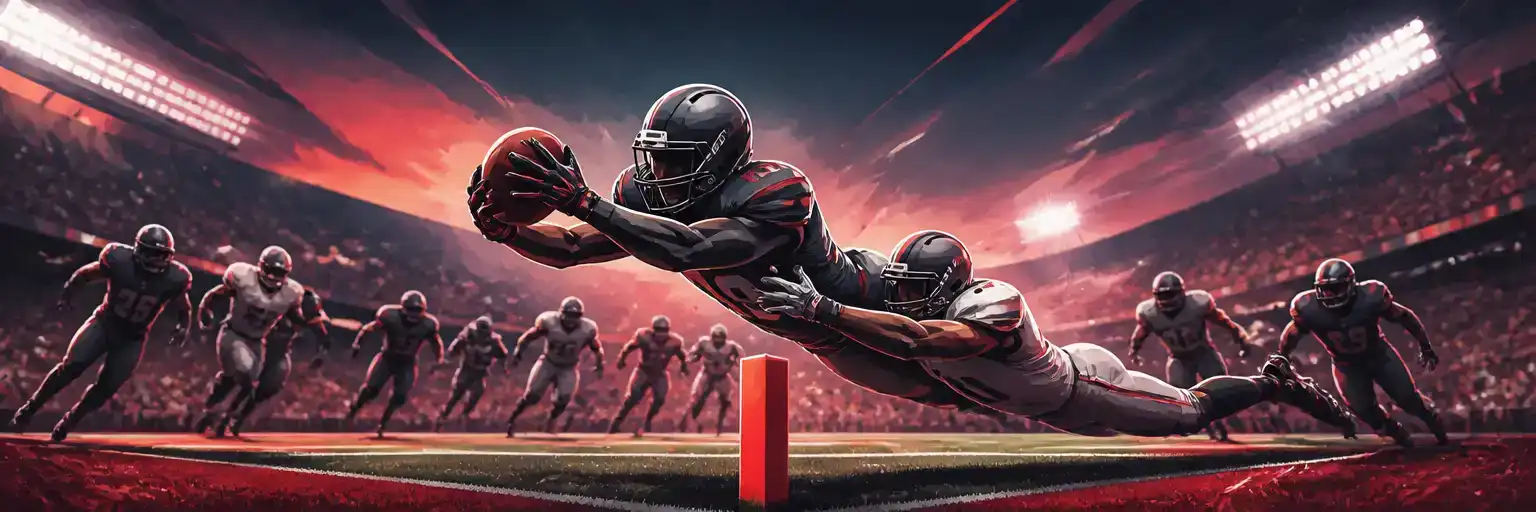
AI-generated image
Here is the uncomfortable test of an era: when a rookie cornerback runs the wrong way on a touchdown, is the first thought "bad read" or "who had money on it"? If it's the second, the NFL has a problem no highlight reel can fix.
What happened, and what didn't
On Thursday night, the Bears beat the Patriots 30-24. On the last play of the first half, Rhamondre Stevenson caught a screen pass and went 48 yards for a touchdown as the clock expired. As the New York Post describes it, Bears rookie Malik Muhammad turned away from the ball carrier to engage another receiver, and Stevenson found an opening. The score cut Chicago's halftime lead to 20-14 instead of 13 points.
Then came the betting angle. OutKick's Craig Carton argued on his show that the play "needs to be investigated," and Fox News reports that the Bears won and covered anyway. Nobody in the documentation offers evidence of wrongdoing. Muhammad also left the game with a toe injury, which is a reminder that this was a young player having a terrible moment on live television.
The play proves nothing, and that's the point
Let's be clear: a blown assignment is not evidence of a fix. Rookies freeze, and defensive backs get lost on broken plays all the time. In our view, a bad read is by far the likeliest explanation, even if Carton says he sees no logical one. His framing, that this is what makes opponents of legal wagering think "the fix is in," is a statement about perception, not proof.
But perception is the whole game here. In our view, the NFL spent years inviting gambling money into its ecosystem, and fans are now being asked to take it on faith that nobody can profit from a bad snap, a missed tackle or a dropped pass. That faith is cheap when nothing odd happens. It gets expensive the first time something does.
We also think the "it didn't affect the spread" defense is weaker than it sounds. Integrity concerns don't depend on the final margin. The question fans ask is whether a given moment was clean, and a league that can't answer fast loses ground even when the answer is boring.
The league is catching up, not leading
To be fair, the NFL isn't asleep. According to Yahoo Sports, it sent a memo to team officials in November 2025 outlining prop bet restrictions with its betting partners after other leagues' scandals. iGaming Business reports the league told its 32 clubs it had begun talks with state legislators and regulators, and named props involving injuries, officiating and pre-determined outcomes as having a "corrosive effect."
That's sensible. It's also reactive. The memo came in the wake of federal cases involving the NBA and MLB, not before them. And the same reporting shows how patchy the response is: a Louisiana regulator is unsure that banning certain props will solve the problem, and a Michigan state senator thinks operators are unlikely to pull props on their own. The fix depends on a stack of regulators, sportsbooks and lawmakers who don't move together.
Even the league's latest posture reads as a request for someone else to do the policing. Reuters reported on October 8 that the NFL said the CFTC may lack the resources to adequately police sports betting, while urging safeguards such as manipulation-sensitive bet limits. We think that's a fair warning, but it's also an admission that the oversight machinery is not where it needs to be.
What we'd want to see
First, speed and transparency. If a league can investigate a play like this quietly and say so, it costs almost nothing. Silence is what feeds the suspicion. A short, plain statement that a review found nothing would do more for credibility than any memo.
Second, narrower markets. The less a single play or a single player's mistake can move money, the less room there is for doubt. That is the logic behind the prop restrictions the league has already floated, and we'd push it further.
Verdict: the Muhammad play is almost certainly nothing, and treating it as a scandal would be unfair to a rookie. But it is a useful stress test, and we think the NFL barely passed it. The league took the revenue first and is building the credibility afterward. Fans will tolerate that order only until the day the odd play turns out not to be innocent.
No topics yet: start the first one.
More stories
The NFL's Paris shop closure shows global growth needs local judgment
Closing a pop-up store is a small decision, but it exposes the real test of NFL expansion: reading a country's politics, not just selling jerseys in its capital.

The Bears' stadium saga is about leverage, and taxpayers should act like it
The Bears' stadium shopping spree is a negotiation, not a fan-experience project, and Illinois should demand real public returns before signing anything.
Arch Manning’s Texas problem is bigger than his quarterback play
Urban Meyer’s criticism lands because Manning is no longer merely a prospect: he is now carrying Texas’ expectations, scrutiny and quarterback uncertainty.
Arkansas, not the rivalry hype, delivered Week 7’s real lesson
Miami–Florida State had the bigger pregame spotlight, but Arkansas’ 31-21 win over Vanderbilt showed why matchup discipline matters more than reputation.